

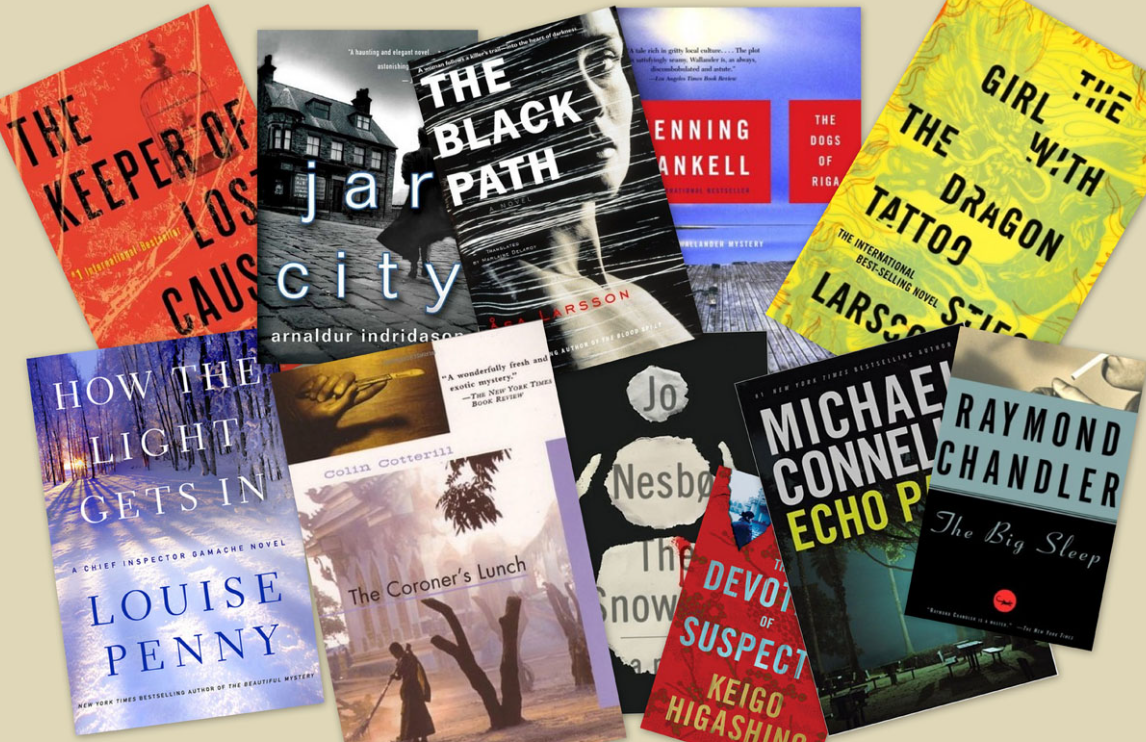
When people think of detective fiction, the first things that usually come to mind are solving crimes and identifying the culprit. In reality, however, different types of mystery fiction place their emphasis on very different elements. Some works focus on logic and intricate tricks, while others are more concerned with social issues, psychological depth, or even atmosphere and violence. For anyone interested in writing mystery fiction, understanding the characteristics of these different traditions is far more important than simply imitating plot twists.
The most classic form is honkaku detective fiction, often known in Japanese as honkaku mystery. This style emphasizes the idea of a fair logical game, with the central focus placed on puzzle construction—locked rooms, alibis, or time-based tricks, for example. Readers are given access to the same information as the detective and are expected to reason their way toward the truth alongside them. As a result, the writer must not only devise an effective mystery, but also carefully control how clues are arranged and how crucial facts are obscured, while still ensuring that the final solution feels logically satisfying. Authors associated with this tradition tend to place great importance on structure, deductive reason, and surprise reversals, with Agatha Christie being one of its best-known representatives.
The “new honkaku” movement, which developed out of the traditional honkaku style, places a much stronger emphasis on narrative structure and the reader’s experience. While classic honkaku mysteries are primarily concerned with the puzzle itself, new honkaku focuses more on how the author guides readers into misunderstanding that puzzle in the first place. Works in this style frequently employ techniques such as unreliable narration, dual narrative structures, and concealed or shifting identities, encouraging readers to arrive at mistaken conclusions on their own during the reading process. The novels of Yukito Ayatsuji and Soji Shimada are among the best-known examples. For writers, new honkaku demands not only logical construction, but also a deep understanding of how readers process narrative information, making it especially appealing to those interested in structural experimentation, shifting perspectives, and narrative technique.
Unlike honkaku mysteries, which center on the act of solving a puzzle, social detective fiction focuses more on the real-world conditions behind crime. These works often deal with issues such as poverty, class, family pressures, or broader social systems, with the investigation itself serving as a way into those realities. In this tradition, intricate tricks matter far less than character motivation and social context. Rather than asking simply “who committed the crime,” social mysteries are more interested in why the crime happened in the first place. As a result, the genre tends to appeal to writers who are interested in social issues, strong character work, and close observation of society. Seicho Matsumoto is widely regarded as one of its defining figures.
“Henkaku” mystery, or the “irregular” detective fiction, takes a very different approach. These works often blend mystery with horror, grotesque imagery, or surreal elements, placing less emphasis on airtight logic and more on unease, atmosphere, and psychological impact. The crimes themselves are frequently bizarre or exaggerated, and what readers tend to remember most is not the deductive process, but the disturbing mood surrounding it. This style is particularly suited to writers drawn to the strange, the psychologically unsettling, or more experimental forms of storytelling, as it relies heavily on the author’s ability to create atmosphere and emotional tension.
Another category is hard-boiled detective fiction. This style generally downplays elaborate puzzles, placing greater emphasis on action, violence, and urban atmosphere. The detective is not a “genius problem-solver,” but rather a figure with personal principles who often operates within moral gray zones. The focus of these works lies in pacing, dialogue, and character presence, rather than intricate plotting. As a result, hard-boiled fiction is a good fit for writers who are drawn to cinematic storytelling, action-driven scenes, and strong character-driven narratives.
Finally, there is courtroom detective fiction. In this subgenre, the focus is not so much on discovering the truth as it is on proving it. Stories typically revolve around testimony, evidence, and logical argumentation, making them heavily dependent on dialogue and the strategic exchange of information. The climax is often not the uncovering of a new clue, but the moment when an established conclusion is overturned in court. This type of fiction requires writers with strong logical thinking, an interest in debate, and a solid ability to write persuasive, engaging dialogue.
There are no strict boundaries between different types of detective fiction, but their narrative priorities can vary significantly. For writers, rather than focusing on which subgenre is currently more popular, a more important question is what kind of reading experience they want to create for their audience.
Featured Image Source: Cecottle
https://cecottle.com/2014/07/13/why-do-we-like-crime-fiction-so-much/
Leave a Reply